
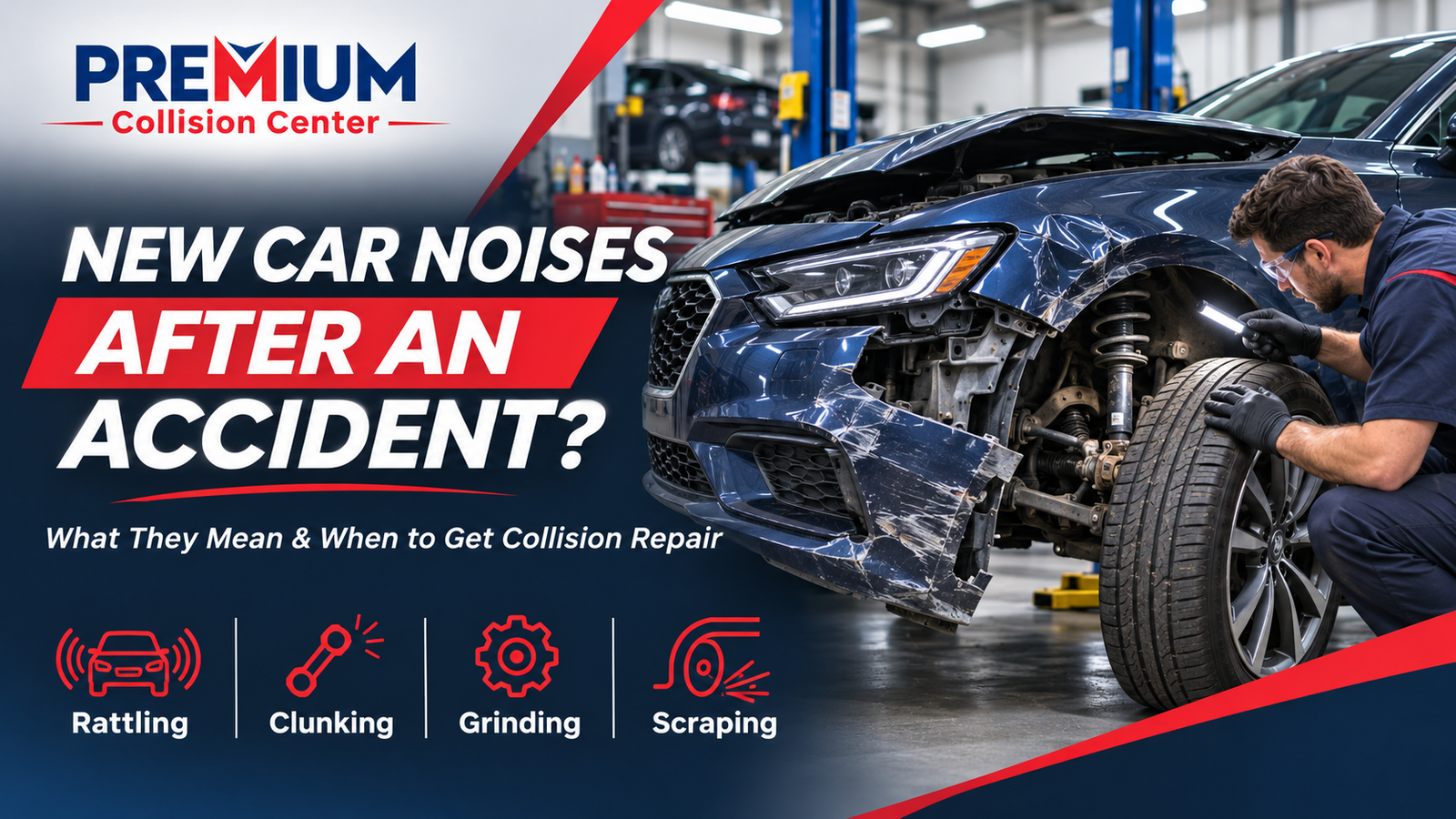
A car accident can affect more than your vehicle’s appearance. Even a minor collision may damage components beneath the body panels, leaving you with unfamiliar rattling, grinding, clunking, or scraping sounds.
If your car is making new noises after an accident, don’t assume they will disappear on their own. These sounds may indicate loose exterior parts, damaged suspension components, brake problems, or other hidden collision damage.
Understanding what those noises could mean can help you recognize potential problems and determine when professional collision repair is necessary.
Why Do Cars Start Making Strange Noises After a Collision?
During an accident, the force of impact travels through different areas of the vehicle. While dents and scratches are easy to see, damage to internal components may not be immediately noticeable.
A collision can affect:
- Suspension components: Control arms, struts, mounts, and other parts may become damaged or misaligned.
- Steering components: Impact damage can affect how the vehicle responds when turning.
- Brake components: Bent or shifted parts may cause grinding, scraping, or unusual friction.
- Exterior body panels: Loose bumpers, fender liners, and mounting brackets can create rattling sounds.
- Exhaust components: Damaged hangers or displaced exhaust parts may vibrate or scrape.
- Wheels and tires: Impact damage can create vibration, humming, or rubbing noises.
Sometimes, these problems become noticeable only after you begin driving again.
That is why a professional post-accident inspection is important, particularly when the collision involved a wheel, bumper, or structural area.
Common Car Noises After an Accident and What They May Mean
Different noises can provide clues about the location of possible damage. However, the sound alone cannot confirm the problem. A qualified inspection is necessary to identify the cause.
| Noise After an Accident | Possible Cause | When You May Notice It | Recommended Action |
|---|---|---|---|
| Rattling | Loose bumper, damaged brackets, exhaust hangers, or underbody panels | Over bumps or rough roads | Schedule a collision damage inspection |
| Clunking | Damaged suspension, steering joints, or mounting components | When turning, braking, or driving over bumps | Arrange prompt professional inspection |
| Grinding | Brake damage, bent backing plate, or wheel-area interference | While braking or moving | Stop driving if severe and arrange towing |
| Squeaking or squealing | Brake contact, shifted components, or suspension issues | During braking or turning | Have the affected system inspected |
| Scraping | Loose fender liner, bumper, splash shield, or exhaust component | While driving or turning | Stop if a part is dragging or contacting a tire |
| Humming or whirring | Damaged wheel bearing, wheel, or tire | As vehicle speed increases | Seek an inspection before further driving |
| Hissing | Possible fluid, cooling-system, or air-system issue | While idling or after driving | Stop if accompanied by a leak, steam, or overheating |
These are possible explanations, not definitive diagnoses. Similar sounds can come from different systems.
What Different Noises Can Tell You About Hidden Collision Damage
1. Rattling Noises May Indicate Loose or Damaged Parts
A rattling sound is one of the more common complaints after a collision.
Even a relatively small impact can loosen:
- Bumper mounting brackets
- Fender liners
- Plastic underbody covers
- Heat shields
- Exhaust hangers
You may notice the noise when accelerating, driving over uneven pavement, or traveling at certain speeds.
While a loose plastic panel may seem minor, it can become more problematic if it starts dragging or contacting a moving component.
A professional collision repair inspection can help determine which parts need adjustment, repair, or replacement.
2. Clunking Sounds May Point to Suspension or Steering Damage
Does your vehicle make a clunking noise when you turn the steering wheel or drive over a bump?
The impact may have affected your suspension or steering system.
Possible damaged components include:
- Control arms
- Ball joints
- Tie rods
- Struts and strut mounts
- Suspension bushings
These parts help maintain vehicle stability, steering response, and proper wheel positioning.
If your car also pulls to one side, feels unstable, or has noticeably changed steering behavior, avoid driving it until it has been assessed.
3. Grinding Noises Could Be Related to Brake or Wheel Damage
A grinding sound after an accident deserves immediate attention, especially if it occurs while braking.
A collision near a wheel may damage or displace brake components. In some cases, a bent brake dust shield can rub against the rotor.
Other potential causes include damaged wheel components or debris trapped near moving parts.
Grinding can also indicate brake wear unrelated to the accident, so the timing of the noise alone is not enough to establish its cause.
If grinding is severe, braking performance changes, or the vehicle feels unsafe, stop driving and arrange professional assistance.
4. Scraping Sounds May Come From Displaced Body Panels
After a front-end or side-impact collision, body panels may shift from their original positions.
A damaged bumper, wheel-well liner, or underbody shield can rub against the road or tire.
You might hear scraping:
- While turning
- When reversing
- During acceleration
- Over bumps or uneven surfaces
Continuing to drive with a loose or dragging component can cause additional damage.
Professional auto body repair can help restore the correct fit and secure attachment of affected parts.
5. Humming or Vibrating Could Signal Wheel-Related Damage
A humming sound that becomes louder with speed may indicate a wheel, tire, or bearing issue.
An impact can damage a wheel or tire even when the exterior body panels appear relatively unaffected.
Watch for additional symptoms such as:
- Steering wheel vibration
- Uneven vehicle movement
- Pulling to one side
- Changes in handling
- Visible tire or wheel damage
These symptoms warrant prompt inspection because the affected components contribute directly to vehicle control.
Can a Minor Car Accident Cause Serious Mechanical Problems?
Yes. A relatively minor-looking accident can sometimes cause hidden damage.
For example, a low-speed impact with a curb or another vehicle may affect wheel alignment or suspension components without producing major exterior damage.
Similarly, a bumper impact may loosen mounting hardware or damage components behind the bumper cover.
The amount of visible damage does not always reveal the full condition of the vehicle.
That is why professional collision repair focuses on identifying damage beyond what can be seen from the outside.
Is It Safe to Drive a Car That Makes Noises After an Accident?
It depends on the cause and severity of the noise.
A small rattle from a loose trim piece presents a different concern from grinding brakes or damaged steering components. However, you should not assume a new sound is harmless without an inspection.
Warning Signs That Mean You Should Stop Driving
Safely pull over and arrange assistance if you notice:
- Loud grinding or severe clunking
- Difficulty steering or braking
- A wheel rubbing against a damaged panel
- Significant vibration or unstable handling
- Fluid leaks, steam, or overheating
- A visibly damaged or deflated tire
- A component dragging underneath the vehicle
If the vehicle cannot be operated safely, towing is generally the better option.
The National Highway Traffic Safety Administration also recognizes that collision damage can affect important vehicle systems even when the vehicle appears drivable.
Why Professional Collision Repair Is Important After an Accident
Professional collision repair involves more than restoring a vehicle’s exterior appearance.
Depending on the damage, a proper assessment may include examining body structure, mounting points, wheel-area components, and other affected systems.
What Happens During a Post-Accident Inspection?
A collision repair facility may perform or coordinate the following checks as appropriate:
1. Exterior Damage Assessment
Technicians examine bumpers, fenders, body panels, mounting points, and visible damage.
2. Underbody Inspection
The underside of the vehicle may be checked for loose shields, damaged brackets, exhaust interference, and impact-related problems.
3. Suspension and Wheel-Area Assessment
When the collision affects a wheel or nearby bodywork, steering, suspension, brakes, wheels, and tires may require further examination.
4. Structural Measurement
If the impact suggests structural damage, specialized equipment may be used to assess vehicle alignment and identify necessary repairs.
5. Repair Planning and Verification
The repair process should follow the vehicle manufacturer’s applicable procedures, with appropriate checks after the work is completed.
For vehicles equipped with driver-assistance technology, collision damage may also require electronic system checks and calibrations when specified by the manufacturer.
How to Prevent Additional Damage After a Car Accident
If you notice an unfamiliar sound after a collision, a few simple steps can help you respond appropriately.
Identify When the Noise Occurs
If the vehicle is already safely parked, think about when you heard the noise:
- While turning
- During braking
- Over bumps
- While accelerating
- At higher speeds
This information can help a technician investigate the affected area.
Do not continue driving simply to reproduce a concerning sound.
Look for Visible Damage
From a safe position, check for obvious problems such as loose body panels, leaking fluids, or damaged tires.
Avoid touching hot, leaking, or unstable components.
Document Your Observations
Write down what you heard and when it began. If it is safe to do so, a short recording may also help explain the symptom to a repair professional.
Schedule a Collision Damage Inspection
Even when the vehicle appears drivable, a new post-accident noise should be investigated before it develops into a more serious problem.
Frequently Asked Questions
Can a car accident cause noises even if there is no visible damage?
Yes. A collision can affect suspension components, brackets, wheel-area parts, and other systems without leaving obvious exterior damage. An inspection can help identify hidden problems.
Why is my car making a rattling noise after a minor accident?
The impact may have loosened a bumper bracket, underbody panel, exhaust hanger, or another component. The exact cause depends on where the noise originates and when it occurs.
Can accident-related noises appear days after a collision?
Yes. Some noises become noticeable only under certain driving conditions. A loose component may begin vibrating later, or a wheel-related problem may become more apparent at particular speeds.
Should I get collision repair if my car still drives normally?
If a new noise began after an accident, an inspection is advisable even if the vehicle seems to drive normally. Hidden damage is not always obvious during everyday driving.
Get Professional Collision Repair in Pasadena, CA
New noises after an accident should never be ignored. Whether you’re hearing rattling near the bumper, clunking while turning, or scraping beneath your vehicle, identifying the cause early can help prevent further damage and address potential safety concerns.
At Premium Collision Center, we provide professional collision repair in Pasadena, CA, including auto body repair, bumper and fender repair, frame alignment, and related collision repair services. Our team carefully evaluates accident-related damage and helps vehicle owners understand the repairs their vehicles need.
If your vehicle has started making unfamiliar noises after a collision, contact Premium Collision Center at 184 N Meridith Ave, Pasadena, CA 91106, or call (626) 775-2200 to discuss your vehicle and arrange an assessment.
Let our experienced team help you take the next step toward restoring your vehicle’s condition, appearance, and safe operation.