Skip to content
Getting into a car accident can be stressful and confusing. Beyond dealing with vehicle damage, California drivers must follow specific laws regarding reporting, exchanging information, and handling insurance claims. Understanding these requirements can help you avoid penalties, protect your rights, and make the repair process much smoother.
At Premium Collision Center, we help Pasadena drivers navigate the aftermath of a collision with professional repair services, insurance claim assistance, and expert guidance throughout the process.
California Collision Laws at a Glance
| Requirement | California Law |
|---|---|
| Stop at the accident scene | Required |
| Exchange driver information | Required |
| Report injuries to authorities | Required |
| DMV Report (SR-1 Form) | Required within 10 days if injuries occur or property damage exceeds $1,000 |
| Maintain insurance coverage | Required by law |
| Leave information after hitting a parked vehicle | Required |
Source: California DMV
What to Do Immediately After a Collision
1. Stop and Stay at the Scene
California law requires drivers involved in a collision to stop immediately. Leaving the scene can lead to serious legal consequences, especially if injuries are involved.
2. Check for Injuries
If anyone is injured, call 911 immediately and request medical assistance. Safety should always be the first priority.
3. Exchange Information
Drivers should exchange:
- Full name
- Phone number
- Driver’s license number
- Insurance information
- Vehicle registration details
Taking photos of the scene and vehicle damage is also highly recommended.
When Must You Report an Accident in California?
One of the most misunderstood California collision laws involves accident reporting.
You must file a report with the California DMV within 10 days if:
- Someone was injured or killed.
- Property damage exceeds $1,000.
This requirement applies whether or not you caused the accident. Failure to report can result in a suspension of your driving privileges.
Accident Reporting Timeline
| Action | Deadline |
| Report injury accident to law enforcement | As soon as possible |
| Submit DMV SR-1 Report | Within 10 days |
| Contact insurance company | Immediately or as soon as practical |
California’s Comparative Negligence Rule
California follows a “pure comparative negligence” system. This means more than one driver can share responsibility for an accident.
For example:
- Driver A is 80% at fault.
- Driver B is 20% at fault.
Driver B may still recover damages, but compensation could be reduced by their percentage of fault.
This is why accurate documentation, witness statements, and professional accident assessments are so important after a collision.
What Happens If You Hit a Parked Car?
If you hit a parked vehicle and cannot locate the owner, California law requires you to leave a note containing:
- Your name
- Address
- Phone number
You should also report the incident to law enforcement. Simply driving away could be treated as a hit-and-run offense.
Understanding Your Right to Choose a Repair Shop
Many drivers don’t realize they have the right to select the collision repair facility they trust.
Insurance companies may suggest preferred repair centers, but California drivers are generally free to choose the body shop that repairs their vehicle. Professional collision centers can also assist with insurance claims and documentation throughout the repair process.
Why Professional Collision Repair Matters
After a collision, hidden structural damage can affect your vehicle’s safety, performance, and resale value.
A qualified collision repair facility can help with:
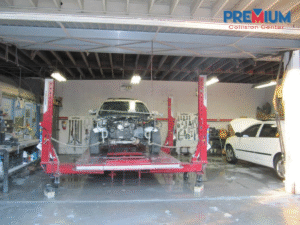
- Collision repair
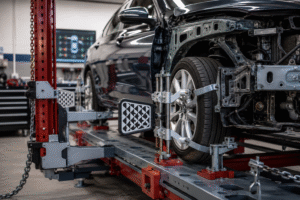
- Frame alignment
- Paint and body work
- Insurance claim assistance
- Towing services
Professional repairs help restore your vehicle to pre-accident condition and ensure it meets safety standards.
Frequently Asked Questions
Do I have to report every accident in California?
No. However, accidents involving injuries, fatalities, or more than $1,000 in property damage must be reported to the DMV within 10 days.
Can I leave the scene if the accident seems minor?
No. California law requires drivers to stop and exchange information, even in minor collisions.
What if the accident wasn’t my fault?
You should still document the scene, exchange information, notify your insurer, and comply with reporting requirements.
Can a body shop help with my insurance claim?
Yes. Many professional collision repair facilities assist customers with claim documentation and communication with insurance providers.
Final Thoughts
Understanding California collision laws can save you time, money, and legal headaches after an accident. Knowing when to report a collision, how fault is determined, and what responsibilities you have at the scene helps protect both your rights and your safety.
If your vehicle has been involved in an accident, Premium Collision Center in Pasadena provides expert collision repair, frame alignment, paint and body work, towing services, and insurance claim assistance to help get you back on the road with confidence.